How Inflation Has Changed the Price of Everyday Products
This guide explains how inflation has changed the price of everyday products, using official figures from the US Bureau of Labor Statistics (BLS). It also explains why some goods, such as eggs and beef, have become noticeably more expensive, while others, such as televisions and computers, have become far cheaper for what they offer.
Inflation is the general rise in prices over time. The BLS measures it with the Consumer Price Index, which follows a basket of goods and services bought by ordinary households. A single product can rise faster or slower than the average, which is why looking at individual items is so useful.
Twenty years of grocery and energy prices
The BLS publishes average prices for a number of everyday items. Comparing September 2006 with August 2026 gives these changes:
- A dozen eggs: $1.25 in September 2006, $2.27 in August 2026 (+81%)
- A gallon of milk: $3.05 in September 2006, $4.23 in August 2026 (+39%)
- A pound of white bread: $1.08 in September 2006, $1.82 in August 2026 (+68%)
- A pound of ground beef: $2.51 in September 2006, $6.77 in August 2026 (+170%)
- A pound of whole chicken: $1.06 in September 2006, $2.01 in August 2026 (+89%)
- A gallon of petrol: $2.59 in September 2006, $4.20 in August 2026 (+62%)
- A kilowatt-hour of electricity: $0.12 in September 2006, $0.20 in August 2026 (+66%)
- A pound of tomatoes: $1.91 in September 2006, $1.98 in August 2026 (+4%)
Percentages are calculated from the BLS average prices and rounded. Some foods more than doubled, while tomatoes barely moved. Energy prices also swing sharply from one year to the next, so a different pair of dates would give different results.
The price of eggs over 36 years
The BLS series for a dozen large Grade A eggs shows $1.22 in January 1990, $0.98 in January 2000, $1.79 in January 2010, $1.46 in January 2020 and $2.32 in October 2026. The price does not rise in a straight line. Disease in flocks and changes in feed costs cause sharp jumps in some years.
Why technology tells a different story
Many products with built-in technology have followed the opposite path. In 1981 the base IBM PC cost $1,565 without a monitor or disk drives. In 1984 the original Macintosh cost $2,495. Today a basic laptop costs less than either and does far more. Our guide to what technology cost in the 1980s puts the old prices next to the hours of work they represented.
Games consoles show a third pattern. The PlayStation 5 launched at $499.99 in 2020, and Sony raised its US price in 2025, which is unusual for an electronics product and was blamed on economic conditions.
How to compare a past price with today
The simplest method is to take the price, find the Consumer Price Index for the year of purchase, and divide the current index by it. The result is the number you multiply by. For example, a launch price of $199 in 1977 is about $1,092 today, and $2,495 in 1984 is about $8,250. We use the BLS index for all of the “today” figures on this site, and they update when new data are published.
Hours of work: another way to look at it
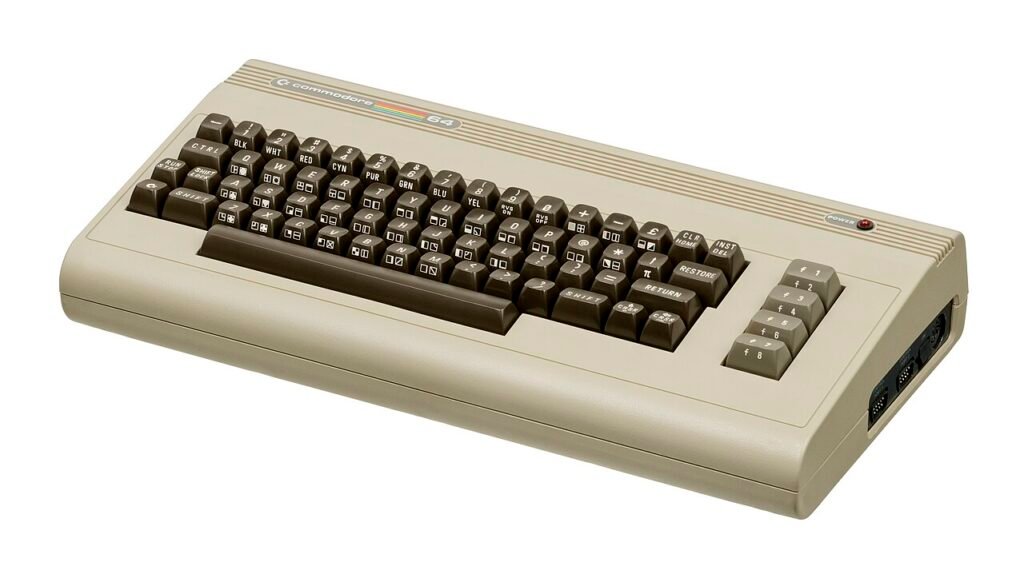
Prices in dollars do not tell the whole story, because pay also changes. A second approach is to count the hours someone would work to afford an item. In 1982 a $595 Commodore 64 took about 178 hours at the $3.35 federal minimum wage. In 2020 a $499.99 PS5 took about 69 hours at $7.25. Fewer hours means the item became easier to afford, even though the dollar figure was similar.
Play it yourself
Do you think you can judge a historic price without looking it up? Price Time Machine is a free daily price-guessing game where you guess the launch price of a famous product and then see what it equals today. You can challenge your friends too.
Questions about how inflation has changed the price of everyday products
What is inflation?
Inflation is the general rise in prices over time, so that a dollar buys less than it did before.
How is inflation measured in the United States?
The Bureau of Labor Statistics publishes the Consumer Price Index each month, which tracks the cost of a basket of goods and services.
Why have some products become cheaper?
Better manufacturing, falling component costs and competition have made many electronics cheaper for what they offer, even when their dollar prices stayed similar.
How much did eggs cost in 1990?
The BLS average price for a dozen large Grade A eggs was $1.22 in January 1990.
Related guides
- How much did technology cost in the 1980s?
- The most expensive products of the 1990s compared with today
- The evolution of video game consoles
Sources
- US Bureau of Labor Statistics: Average price data, selected items
- Federal Reserve Bank of St. Louis (FRED), from BLS: Average Price of Eggs, Grade A, Large
- Company archive: IBM History, The IBM PC
- US Department of Labor: History of federal minimum wage rates
- US Bureau of Labor Statistics: Consumer Price Index (CPI-U)